This isn't my usual deep-dive article where I unpack a specific subject such as an app I built, my obsession with craft, or revisiting an old iPod. I set out to share a few reflections and musings on a year marked by personal and professional change. This was a year of stripping back to the essentials: where I live, how I work, and what I build.
I've been running this site for just over 20 years now. I began writing it in my dorm room at Georgia Tech, hosted on a G4 Mac Mini1, as a way for me to share technical how-to guides and news. I used WordPress for the first handful of years, then the Ruby static site generator Jekyll for a decade. It wasn't until 2024 that I redesigned and rebuilt this site from scratch using Next.js.2
I'll be turning 40 years old in 2026, which is still surreal to me. For my entire career, I was always the younger one on the team, and what feels like a sudden shift means that's no longer true. In many ways, that change is actually a clarifying feeling.
I'm more focused and fired up to do great work than I've ever been. I'm driven by the desire to craft great products: things I can be proud of working on. My framing shifted from "Can I help this team build this product?" to "Is this the problem I want to spend my best years on?" I've developed a visceral aversion to working in any environment where I don't feel like I can do the best work of my career.
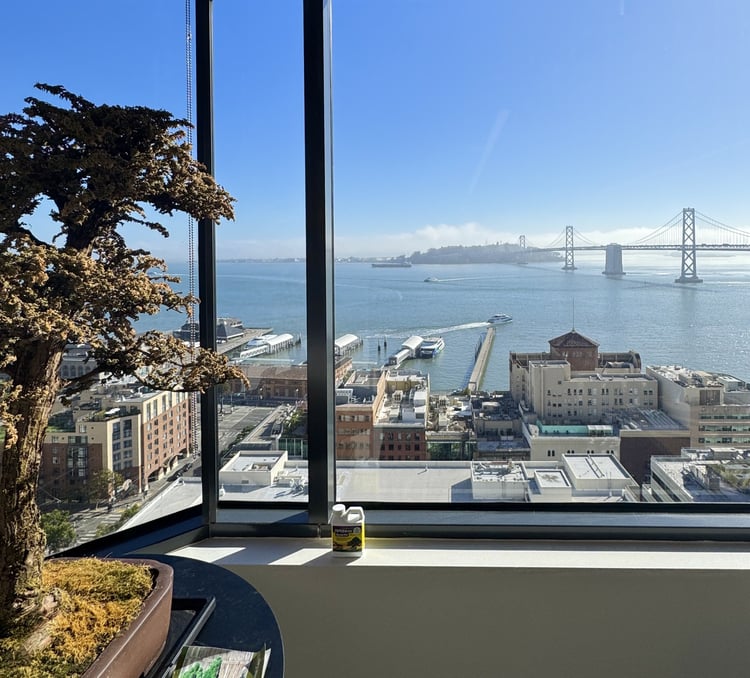
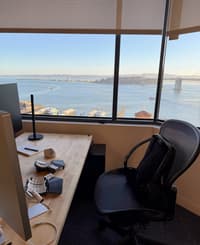
The view from the Sesame office in San Francisco where I now work
My taste and judgment have compounded over these years. I've been through similar experiences that I can draw from across whatever I'm working on. Even on minor UI challenges alone, I'm still surprised at how often I pull inspiration from my time at Twitter where density was king and compact timelines ruled everything. I always try to keep that as just one input though, especially working in AI when so much is continually changing and you can't bring assumptions with you.3
My 2025 at a glance
- Sold my house.
- Left my role as Co-Founder and Head of Design at Limitless (née Rewind AI).
- Took 4 months off. Traveled, talked to 30+ founders, companies, and investors as I explored new opportunities.
- Started a new role as Head of Design at Sesame.
- Started working in an office full-time. After years working remotely, I'm loving it.
- Bought a car after 7 years without one, and learned my lesson about buying a new redesign generation car.
- Limitless was acquired by Meta.
- Personal resets:
- Stopped consuming caffeine entirely. Decaf coffee only, not even green tea.
- Had my second year of no alcohol.
- Stopped wearing my Apple Watch (got annoyed with notifications, wanted to simplify.)
- Mostly stopped wearing contact lenses in favor of my glasses4.
Selling my house
The year started with me finally selling the one-bedroom condo I had purchased a decade earlier. I completely regret purchasing that place. Not because it had major maintenance issues or anything like that, but because it was a horrible investment. I had it for 10 years and still lost money on it once you factor in the lower sale price, prep work to sell (staging, floor upgrades, painting), and associated fees.
It was a relatively new building in a bustling shopping and restaurant area in Nob Hill near Russian Hill. The entire building was only nine years old when I bought my unit, so I only had minor maintenance tasks over the years. I loved living there. The unit was modern, had a good HOA, no issues with neighbors, and had 500/500 Webpass as the ISP (this was before fiber was commonplace and before Google Fiber purchased Webpass).



The condo staged for sale.
Why did I buy this place to begin with? I got it in 2015 when I was 29. I had been at Twitter for a few years and made some money from the Twitter IPO. I hated having roommates, and the alternative of paying $4,000–$5,000 a month to rent my own apartment didn't feel like a good idea. And at the time, it felt like you couldn't go wrong buying in San Francisco. More and more companies were becoming SF-based instead of Silicon Valley, and many friends and coworkers around me were buying homes too.
I purchased it with 25% down and a 2.75% 7-year ARM mortgage from First Republic Bank (RIP, they were great). I figured seven years was plenty of time to either sell or refinance before the rates increased. That didn't help either.
I moved to New York in 2019 and rented out my condo through a property management company that handled everything while I was out of state. I was in NYC for four years and lost money every month renting it out. Not to mention the property management company was horrible and a pain to deal with. My 7-year ARM's fixed period ended in mid-2022 while I was in New York while the rate was increasing monthly. By the time I sold the unit, my expired 2.75% ARM mortgage had exceeded 7.5%. It wasn't worth refinancing by then, I knew I wanted to sell it soon.
My wife and I came back to San Francisco in 2023. That same horrible property management company forgot to have the tenant sign a lease (you had one job..), and the tenant ended up moving out unexpectedly a few months in. It lined up perfectly with the end of our apartment lease in New York, so we decided to head to San Francisco for a few months to fix up the condo, sell it, then head back to NYC.
When we got back in January 2023, it wasn't a great time to sell, so we stayed. We didn't mind escaping the New York winter for a while, and the AI boom was starting to make SF feel alive again. We still love New York, but at the moment it really feels like if you work in tech and AI, you need to be here. The energy is palpable.
We eventually got around to selling it at the start of 2025. I always thought selling it would be a hassle and that I would need to do upgrades to make it enticing. Well, it ended up being so much easier to sell than I expected.
A former coworker introduced me to a small real estate agency; they were perfect. I dropped off the keys and they took it from there. They refinished the floors, upgraded some things in the bathroom, updated the heating system, painted, and staged. In less than two months, it sold. I received 11 offers: four competitive and three all cash. Even though I lost money on the sale all things considered, I had expected it to sell for considerably less given it was listed in January instead of the ideal time in spring.
I learned my lesson with this place. I don't see myself purchasing a house in San Francisco anytime soon. The opportunity cost of the down payment alone stings. It would have tripled in a basic total U.S. stock market ETF over those 10 years.
We've since been renting in Noe Valley for the last year. I finally have enough space and my own garage, so I moved over all of my stuff that had been stored with family: my Eames chair, Pro Display XDR, and old gear like this original iSight.
Finding this rental was a huge challenge. Every evening for what felt like a year was spent scouring rental sites before we eventually found it off-market through a friend. At one point there was an apartment in Pacific Heights we loved so much we wrote a love letter (more common with purchases, not rentals), offered many months of cash up front, and even extra rent. There was just too much competition.
I frequently hear from people saying they're moving to San Francisco in a month or two. My advice is always the same: start looking for your apartment as early as possible!
Leaving Limitless
2025 started with an itch. After two and a half years of working on Rewind, then through its evolution to Limitless and the Limitless Pendant, I needed a change. I needed a new design and product challenge.
In my time there, we really embodied what a startup is all about. We had a true customer focus, endless product iteration, countless product strategy refinements, and long hours sweating the details. We were a remote team of ~15-20 people in recent years. I was the only designer for a period and wrote about what this was like in The Startup Designer.
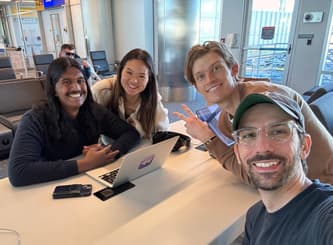
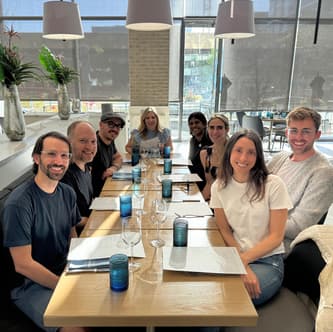
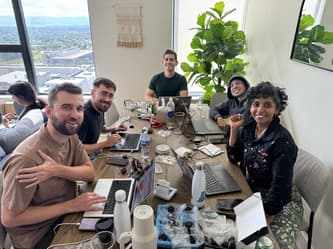
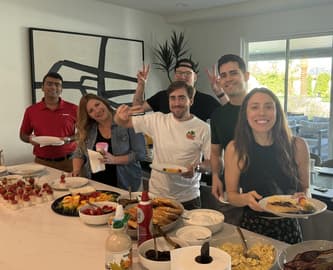
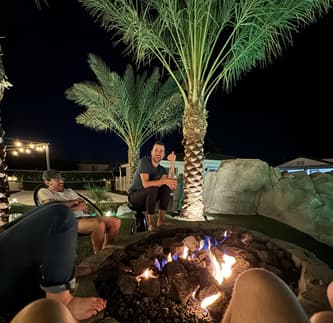
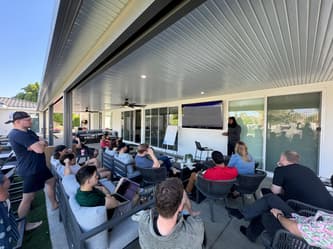
The Limitless team at various offsites.
We built a lot of stuff as we searched for product-market fit. Rewind was a native Mac app that captured everything you'd seen (via screen capture), said and heard (via opt-in meeting and audio recording), compressed it, and made it actionable. You could visually rewind time as well as search or ask AI to find anything you've seen.
I loved that it had a local-first approach, private by design, and was a bit uncanny until you got used to it. An app that records your screen all the time? Crazy. But it worked.
I would tell people that making Rewind was probably a similar user and marketing challenge to what the team at 1Password likely went through when they were starting out in the mid-2000s. "You want me to put all my passwords into this one app I'm supposed to trust with my digital life?" Crazy. But it worked.
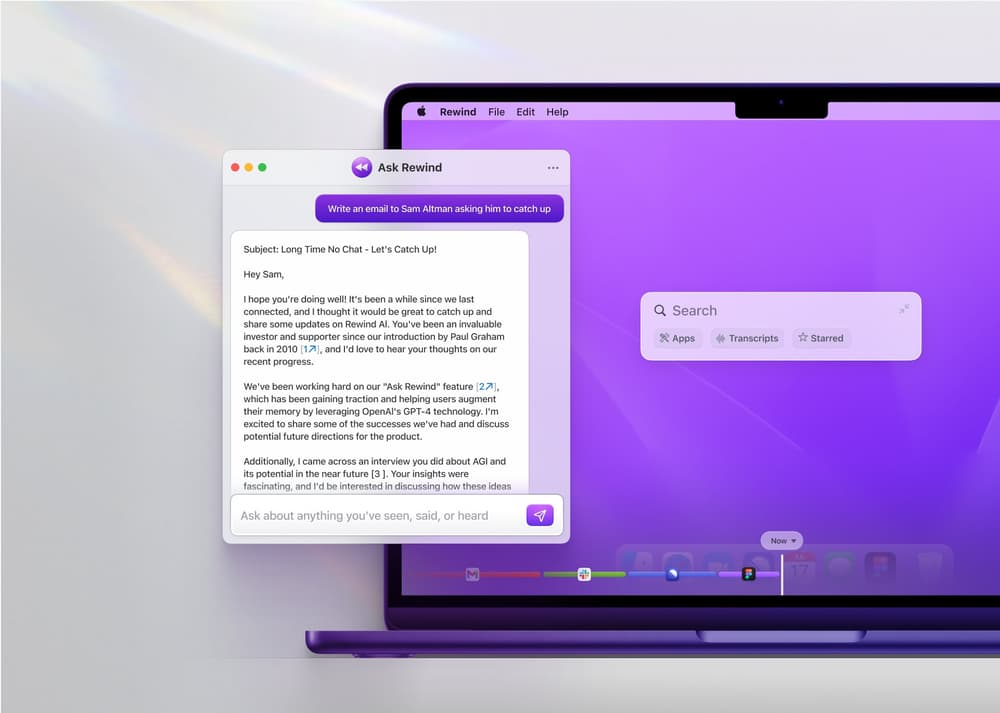
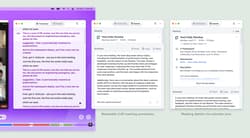
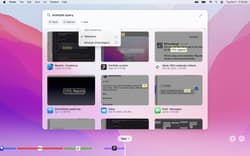
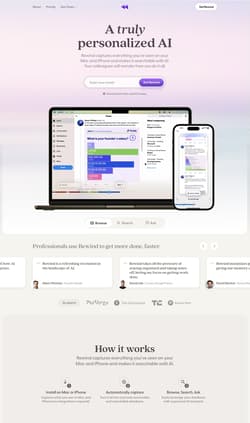
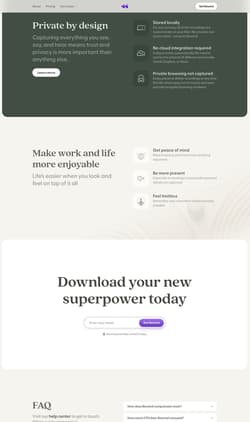
The Rewind Mac app. Bottom right: Rewind website I designed and built.
We also made Rewind for iOS, then I spent some time diving into Windows development with C# and WinUI as we worked on a Windows app focused on using a local LLM.
While the product had some challenges with search quality due to limitations from the local approach, I still think the Rewind concept is solid. Microsoft famously thought so too and created the Rewind-inspired Recall feature. There are some things I'd approach differently if Rewind were rebuilt from the ground up today: prioritize task-based workflows over pure recall, and explore using lightweight visual models for data classification.
Rewind described on Lenny's podcast
We then pivoted to a cloud-based product called Limitless, largely as a result of feeling limited by what we could achieve with Rewind's local-based approach. There was the cross-platform Limitless web and desktop app, and then the React Native mobile app.
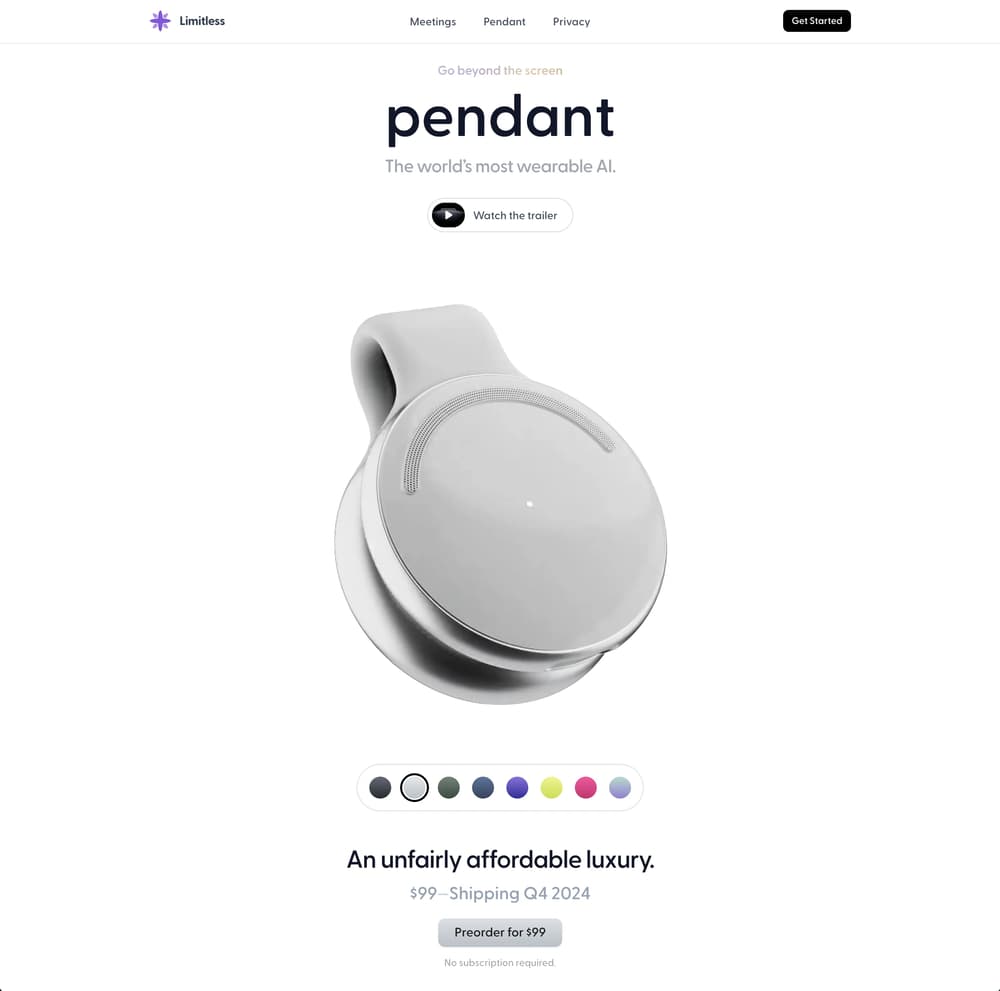
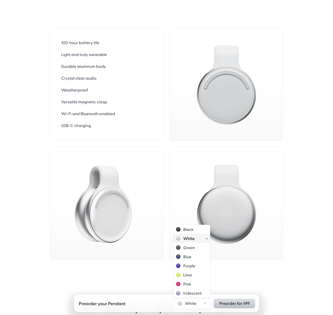
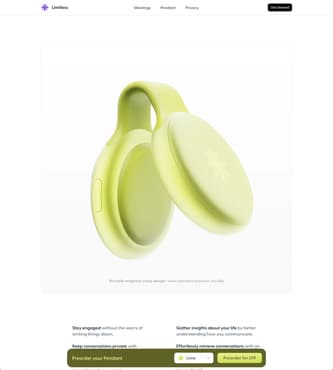
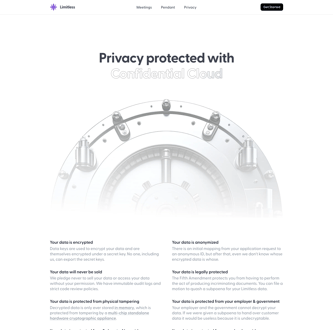
The Limitless.ai website I designed and built with lots of design details. My favorite detail was custom animating cursors when you selected a new Pendant color.
Limitless started with meeting recording and summary functionality. That was a recurring use case people had with Rewind. While I personally felt that functionality wasn't the most exciting thing to work on, nor did it have staying power with countless meetings-focused competitors working on the exact same thing, we had an ambitious roadmap. The goal was to continually add more data sources over time for context.
One of those data sources was to be our own hardware, the Limitless Pendant, to capture in-person meetings and conversations to help differentiate us from competitors.
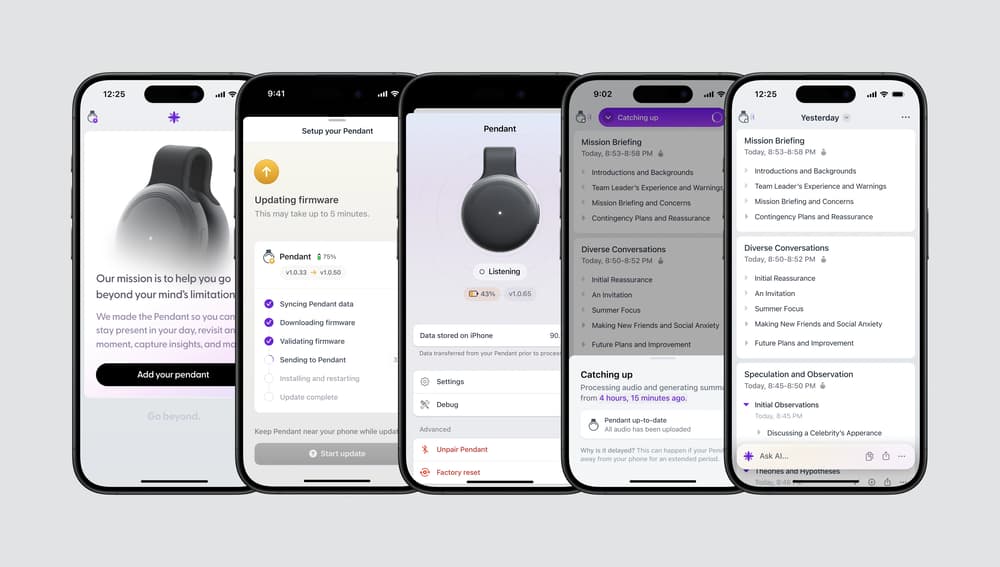
Early versions of Limitless for iPhone I designed.
The Pendant was a bold bet, but after a year of building its companion app and dogfooding it, I realized it wasn't a product for me. I take privacy extraordinarily seriously and lean introverted, so I wasn't exactly comfortable wearing a recording device out of the house and asking for consent every time I encountered someone new. On top of that, my wife wasn't comfortable with me wearing it at home either. The product had real use cases, and we heard about that consistently from customers, but it wasn't for me.
Meanwhile, the tech industry was exploding as LLM capabilities improved at a rapid clip and I felt like I was watching from the sidelines. Agents, deep research, multimodal models, new interaction paradigms... I wanted to be at the forefront of that. The opportunity cost felt too high. My heart wasn't in it, and I decided to leave.
Acquired by Meta
The Rewind and Limitless story came to a close some months later at the end of 2025 with a Meta acquisition. It felt like a great time for the team to join a larger company with the means to really compete with AI hardware and services coming out across the industry. It was a well-deserved exit for the team.
Financially, I received a modest sum for shares I had early exercised, and for my vested in-the-money stock options. I had also previously sold some equity5 right after the company's last public round.
I'll likely put some of it toward a few angel investments. I've done several angel investments in the past, mostly in crypto companies like Rainbow and XMTP (the messaging protocol now used by Coinbase Base and World). However, I've declined to do them more regularly because I feel that to do a good job, you need to have the time and bandwidth to stay on top of deal flow—seek it, meet the founders, and maybe you end up investing in 1 out of every 10+ teams you come across.
Time off
After leaving Limitless, I gave myself permission to slow down before jumping into something new. I ended up taking four months off, though it didn't really feel like time off at all. I was meeting with founders, companies, and VCs for weeks, and also spent time I was working on my design portfolio.In hindsight I went overkill on the portfolio—I had two versions, the most comprehensive of which was 177 slides—but the act of doing it was a great way to reflect on how I worked, what gave me energy, and what drained it.
My wife made the most of me no longer working nights and weekends, and we ended up taking a few trips. First to Germany and Austria, then later to Milan and Lake Como for a friend's birthday.






Altaussee and Hallstatt, Austria. I haven't traveled with my big Sony a7R IV in some years. I get by with my iPhone, shooting in RAW and minor edits in Darkroom app.
I stopped consuming caffeine entirely in 2025. It was during the trip to a medical health resort called MayrLife on Lake Altaussee, Austria that made that happen. This place was strict: a set schedule with strict meal times along with no caffeine or alcohol. The alcohol part was fine, but getting off of caffeine was a challenge.
I had zero alcohol in all of 2024 and maybe just 5 drinks for all of 2025. I just don't really care for it anymore, and never loved the feeling of feeling something the next morning even if I only had two cocktails the night before. After the first full year of zero alcohol, it's like I was rewired and completely don't even care for alcohol anymore. I'll have some non-alcoholic beers and mocktails at times, of course.
I had been used to having a 2-3 strong cups of coffee every day. I ended up having about 4 or 5 days of caffeine withdrawal migraines as I went cold turkey. After that, I decided I didn't want to go back to my normal coffee routine. I still love coffee and have a cup of decaf every morning though. I've learned all about the different kinds of decaf processes like Swiss Water Process (chemical free; the lowest caffeine but the worst taste) and Ethyl Acetate (best taste). My current decaf favorite is by Perc Coffee, but I'm still trying out others I'm discovering on the r/decaf subreddit.
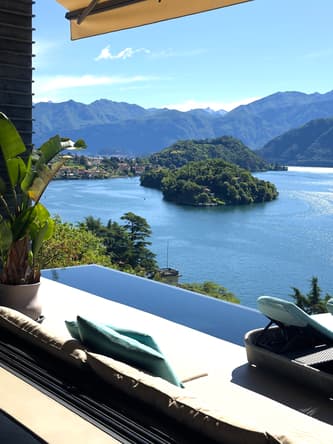
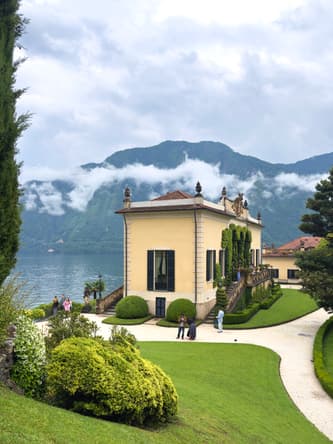
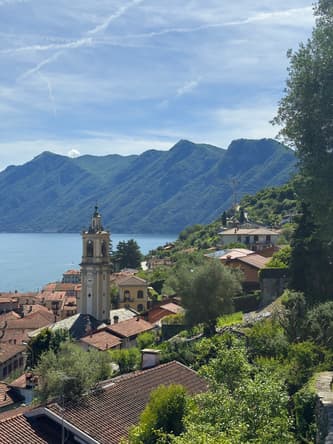
Lake Como, Italy. Went for my friend Ashley's birthday.
After the initial withdrawal issues, staying off of caffeine wasn't that bad. Decaf coffee doesn't dehydrate you during the day, which is something I could feel. I used to rely on melatonin and sometimes magnesium to more easily fall asleep at night after a day of coffees, but now I don't need that either. The biggest downside is that while I love the flavor of coffee it's harder to find good decaf options at coffee shops. If they do have decaf, it's likely just one kind and only served as an americano, not pour over or brewed.
I also took the time to hit reset and simplify a few other things in my life. On the nerdy side, I got rid of the two servers I had been running for a while. I had one server that managed this website's email newsletter, that I publish to very infrequently. I had been using a self-hosted web app called Sendy that uses AWS SES to send emails cheaply. I ditched that in favor of Kit. But between that and my other server I used to host my personal Mastodon instance, I hated having to login every few weeks to install an update or fix something. It's a small thing, but it freed up mental space.6
I stopped wearing my Apple Watch too. I was constantly annoyed by all the useless notifications and buzzing on my wrist. While I appreciated the health tracking functionality, I wanted to simplify. It didn't start as an overnight consciousness decision. I got a simple Casio F-91W watch, changed the strap and started wearing it some days. Eventually that became everyday. Half of what I appreciate is that it's not a smartwatch. The other half I appreciate is that it's just so small and lightweight.
Exploring what's next
I wrote down what was critical to me as I started thinking about what I wanted in a new role. At the end of the day, I wanted to work with an exceptionally talented team, at the forefront of AI, with leadership and a CEO who genuinely care about quality, and as little organizational friction as possible between us and an outstandingly well-crafted product.
I wasn't in a rush to find the next thing. I had time and wanted to optimize for seeing what was out there first. I'm often reminded of How To Be Successful by Sam Altman, where he writes:
“I am willing to take as much time as needed between projects to find my next thing. But I always want it to be a project that, if successful, will make the rest of my career look like a footnote.”
Being in San Francisco and being public about the fact that I was looking for my next thing was like a cheat code for that process. My days were filled as I met with several dozen founders, companies, VCs and friends.
Every founder and team I met with had a unique perspective on where the world is heading, and they were fighting through the ambiguity to get there. It's still wild to me that this level of energy and ambition is just par for the course in San Francisco.
I'm grateful to folks who took time to chat with me:
- Investors: A16Z, NEA, First Round Capital, Felicis Ventures, Bain Capital Ventures, Sutter Hill Ventures, Lightspeed Venture Partners, Marc Bhargava from GC and others.
- Companies: Cursor, Perplexity, Notion, Hooglee, Arcade AI, Microsoft AI, Sesame, LM Studio, OpenAI, Anthropic, Figma, World Labs and more.
- Friends: I reconnected with friends and acquaintances from Physical Intelligence, Vercel, Shortwave, Luma Labs, Streak CRM, Visual Electric, Humane/HP IQ, Variant.ai, Shopify, Macroscope, Agora.xyz, Adam Lisagor, Ulf Schwekendiek, Jake Jolis and others.
What I Learned
A few things crystallized from all these conversations:
- Some founders are really, really good at talking about their company. They have a clear view of the future and make the steps to get there feel obvious, almost expected. Almost like Steve Jobs's "reality distortion field." Their energy is infectious.7
- Builders are back. Thanks in no small part to AI, teams are doing more with far less. Orgs are extremely flat. ICs are preferred over managers. Designers who code aren't a nice-to-have anymore: they're the norm. The era of bloated teams shipping slowly feels firmly behind us.8 The talent stack has collapsed.
- The best designers, engineers, and product managers who weren't already working closely with AI were thinking about leaving their companies.
What I Wanted
All of this helped me articulate exactly what I wanted next after talking with small teams and large teams.
I'm happiest, most productive, and most ambitious working on 0→1 products and bold bets that scratch at something new in AI, where there's a shared understanding of quality. I would much rather be the first designer tasked with creating an app or site from scratch than a designer or manager on a team of dozens responsible for just a sliver of an app. Not on a team of dozens optimizing something that already exists. I wanted to stay close to the craft while also growing a team.
When I began this process, I actually thought I wanted to optimize for compensation and go to a late-stage, pre-IPO, or public company. I had always felt like you wanted to alternate between riskier early-stage startups and late-stage companies in your career so you wouldn't get "behind" with savings and investments. It became clear to me that was not where my heart was at all. I needed to work on something I was beyond passionate about with a team that shared that desire.
Joining Sesame
Sesame ended up being everything I was looking for and more. It's been phenomenal across the board: the shared appreciation and ambition for excelling at craft, the remarkable team comprised of industry veterans, and the bold bets we're making on the product we're building. Yes… I know everyone says this about their company when they join, but that's really how I feel.
I've never worked somewhere that truly cared about craft and understood it this much. A lot of that is due to the CEO, Brendan Iribe, who was one of the founders of Oculus VR. Brendan reached out after I published Browse No More. He's one of those founders I was alluding to in the previous section: someone who's really, really good at speaking about the importance of what the team is building, about taste, and about how great products are made.
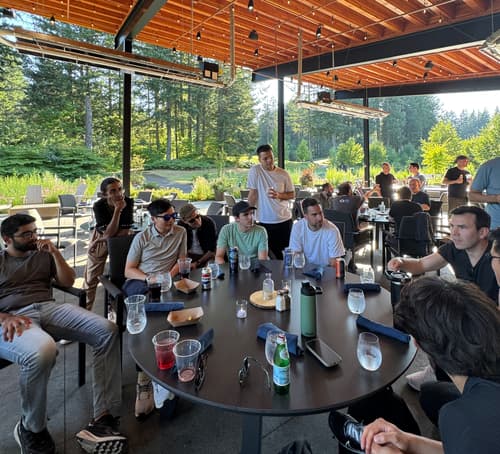
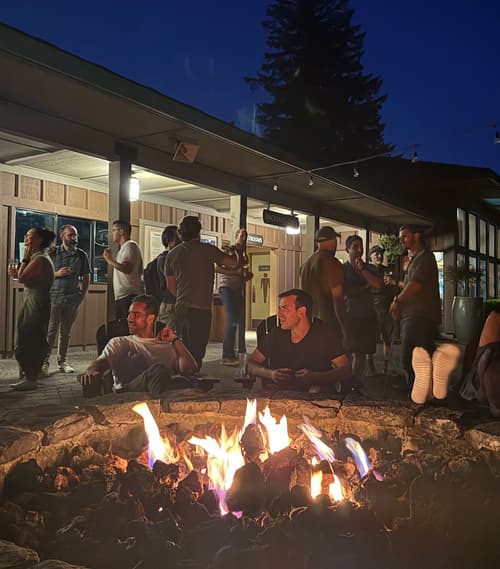
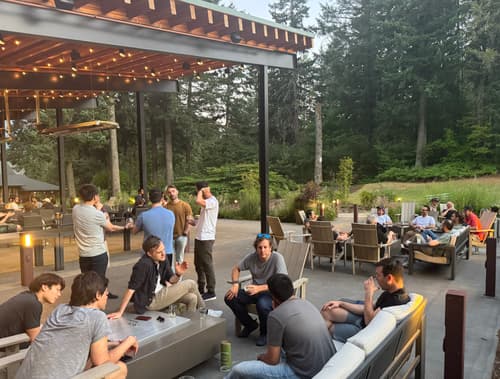
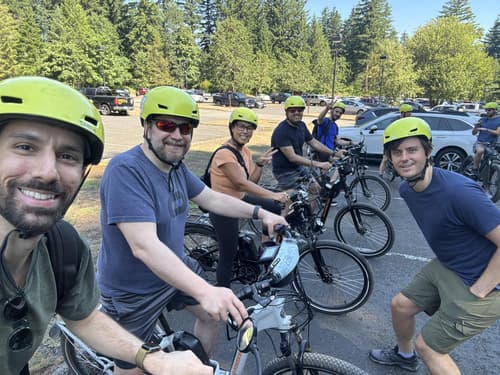
Sesame team offsite in Skamania, Washington
I've been on enough teams to know that it really doesn't matter if various executives on the leadership team say quality matters. In my experience, it has to come directly from the CEO too. Brendan gets it; for software and for hardware. I later met the rest of the team, including the CPO Nate Mitchell (also one of the founders of Oculus VR), and it was clear this was a team I needed to work with.
What We're Building
We're building both software and hardware. On the software side, we're building what we call personal agents. They're not productivity assistants, they're more like a collaborator and thought partner you just talk with. But even that description doesn't do our ambitions here justice. They're much more than that.
We've been focusing on making them remarkably lifelike. That comes across in their unique personalities and how they carry the conversation. It's the sort of thing you need to experience to see what I mean: you can try our research preview released earlier in 2025 that over a million people have used. We're also working on an iOS app—you can get on the waitlist here.
"This is not another productivity assistant. It's something different: a lifelike, expressive collaborator—designed to engage and evolve with its user over time."
The second piece is hardware. We're making the world's best intelligent eyewear. They're fashion-forward and made for all-day comfort. Sequoia has more details on both our software and hardware in their article A New Era for Voice.
The mission we talk about that I really love is that we're working towards bringing the computer to life with our hardware and focus on voice-first AI. We've been saying "software is eating the world" for 15 years now. Now as AI is eating software, hardware is becoming the new distribution and interaction frontier for AI. I'm not saying we won't have phones in 5 years (I still absolutely love mine), but I'm eager to spend time collaborating with the team here to see what these new interfaces will enable.
"Hardware becomes a more popular moat (amid a surge of hardware startups). In a world where everyone can make their own software, unique products will emerge that tightly couple hardware and software." —Scott Belsky
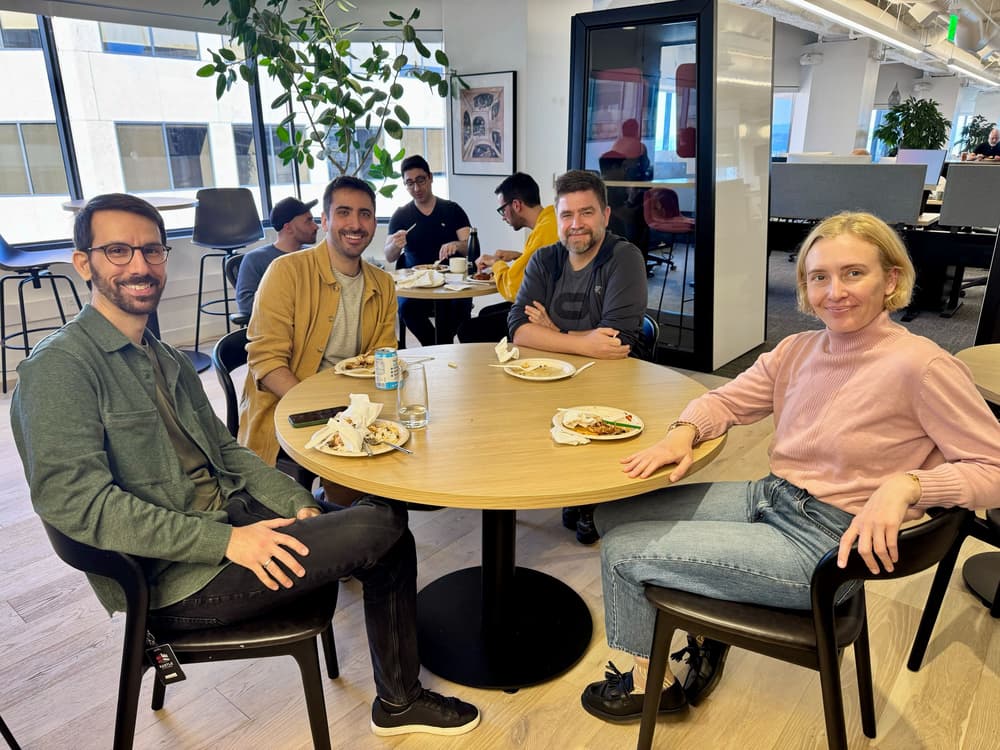
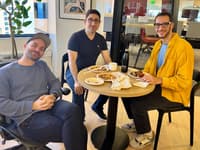


Sesame San Francisco one week when the NYC and Bellevue teams were visiting. Top: I'm on the left
And after five years of almost entirely working from home, I'm thrilled to be back in an office. When covid started, I thought I'd never go back to the office. I loved having my own desk setup and being able to focus.
Now I just miss working with people, whiteboarding design ideas, and perfecting prototypes right next to teammates. Also, teams building hardware kind of need to be in person with the number of physical prototypes we're continually crafting and testing out.
Design @ Sesame
It's been six months since I joined as Sesame's Head of Design, based out of our San Francisco office. My current day-to-day is heavy on design and code (Figma & Xcode for our iOS app)9 and helping out with things across product, hardware, brand, and marketing.
We've got a lot in store for design this year across mobile, web, brand, and hardware. It's always a fun design challenge to work beyond just software product design. Basheer Tome joined my team to focus on hardware design, interaction design, prototyping, and everything in between. He had previously worked on Google Glass, Google Pixel Buds, autonomous driving, and all sorts of projects spanning PM, ID and CMF at Fellow.
I'm looking forward to growing our design team this year. I'm the only software product designer at the moment10, and am looking to hire a seasoned product designer to work closely with me in our San Francisco office with a focus on visual design with a passion for craft and design engineering.
We're hiring for quite a few different roles outside design too.
How I worked in 2025
I finally perfected my home office setup. For the two years prior I had a small desk in the bedroom at my previous place. Once we moved, I finally had space to build things out the way I wanted. I had room for my iMac G3 and vintage gadgets, a much larger 72x30" standing desk, and a lounge chair behind it. I also finally shipped my Pro Display XDR to San Francisco from where it had been in storage at my in-laws' house on the East Coast.
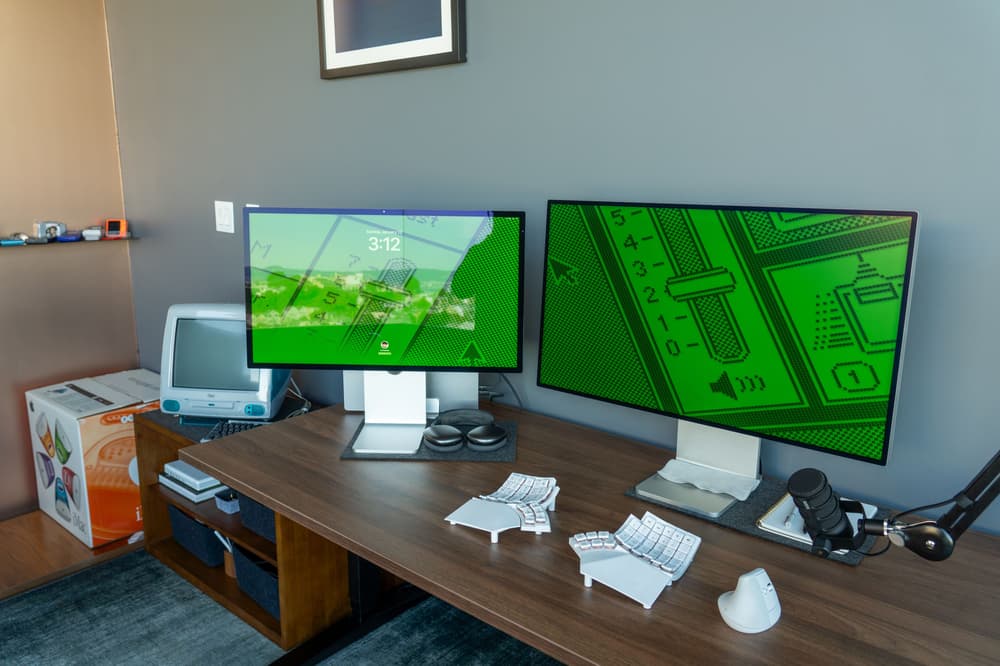
iMac G3, Studio Display, Pro Display XDR, Glove80 keyboard, Uplift Standing Desk with custom LED lighting.
For the last decade, I've had occasional wrist pain during extended computing sessions, but I have it under control these days with a combination of an adjustable desk (kept low enough so my elbows are properly angled), the Glove80 split ergonomic ortholinear keyboard, a Logi Lift vertical mouse, and a wrist brace for long sessions.
Using a keyboard like the Glove80 (or similar models like the Kinesis Advantage2 I used before it) takes some getting used to, but it's worth it if you're in a similar boat with wrist pain from RSI. Separately, I try to use AI voice dictation apps like Aqua to speak instead of type when I can. I haven't quite built that habit yet. I've been thinking about getting a gooseneck desk mic for the office, like some other coworkers have, to do this more often.
I've made a few other additions to my gear recently, but the standouts are my 333MHz Revision D iMac G3 from 1999, my original iSight camera, and my new OWC 4-bay M.2 SSD RAID enclosure. With the latter I've also started using Immich to manage my photos (hosted on my Mac, behind Tailscale) and will probably migrate my Google Photos to it.
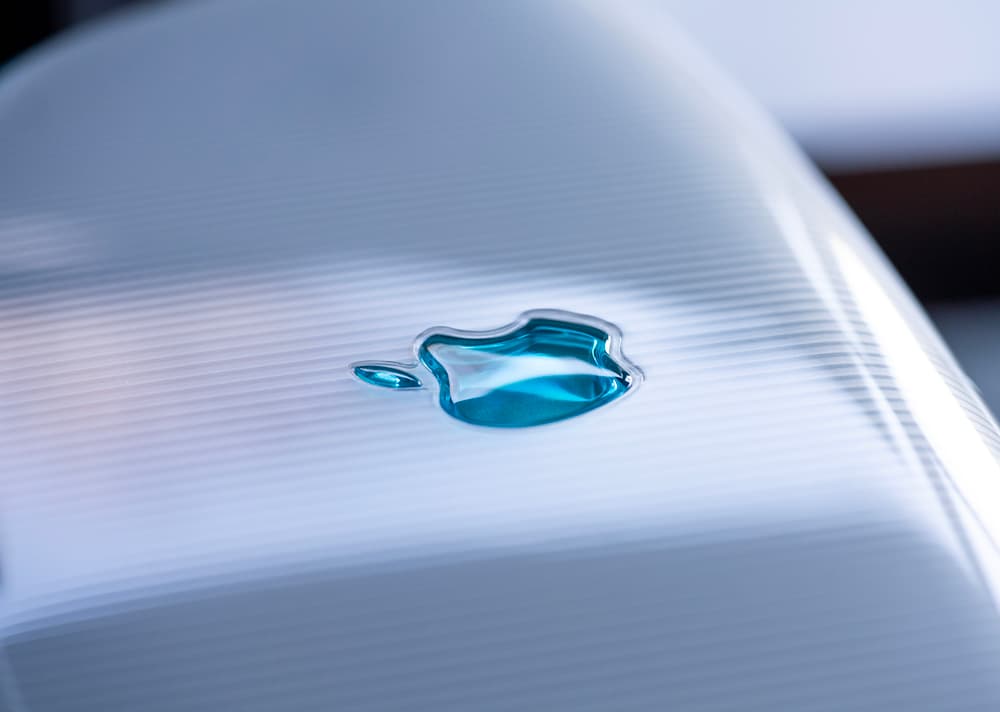
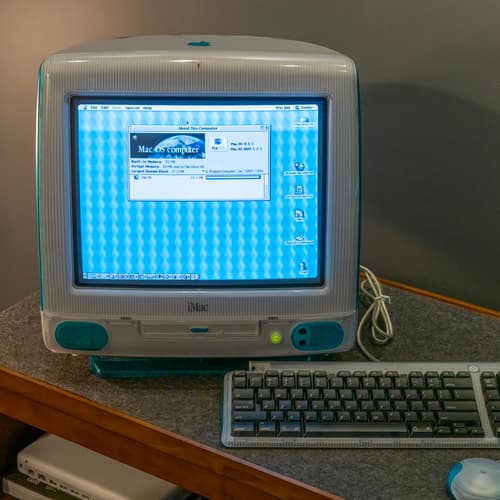
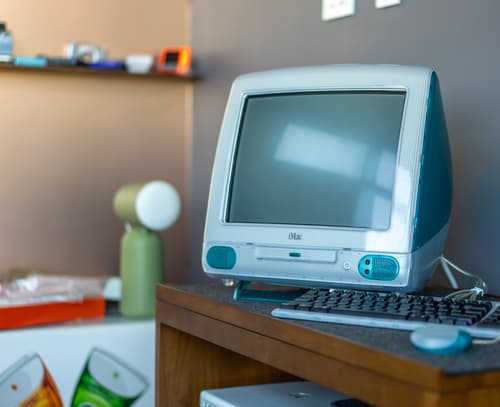
I've been meaning to post a much more in-depth article about the iMac. I updated the RAM, converted the HD to an SLC NAND flash CompactFlash card, and applied new thermal paste to the CPU heatsink. So much nostalgia.
Ironically, I now work in the office on weekdays, so the setup doesn't get as much use anymore. I purchased a car for my commute, the newly redesigned 2025.5 Audi SQ5 SUV. I haven't had a car since I sold my E92 M3 about 7 years ago. Mechanically, it's great: quick, makes a nice sound, and overall fun to drive. The rest is just okay. The interior design leaves a lot to be desired. There's ugly piano black plastic everywhere and too many controls are touch-based.
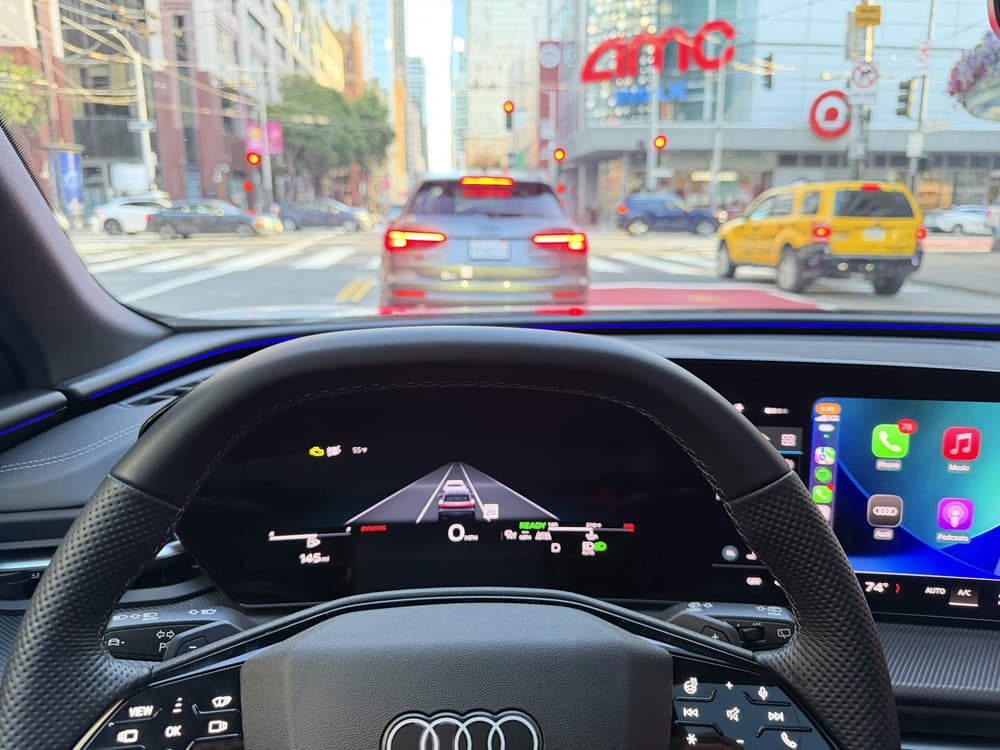
Driving to work… notice the check engine light that comes on and off randomly. Take it from me: don't buy the first year of a new car generation.
But the icing on the cake is the garbage computer system. Not the infotainment system (though I really dislike that it lacks a traditional tachometer gauge cluster setting), but the whole car's computer system has been remarkably buggy. Various warnings and check engine lights constantly come on and then vanish on their own. I took it in for service just a month after I purchased it. They kept it for more than a week and the issues persisted. Others on Reddit are having similar problems and hope an upcoming software update will fix everything. I've definitely learned my lesson about buying a new generation car.
Apps I love
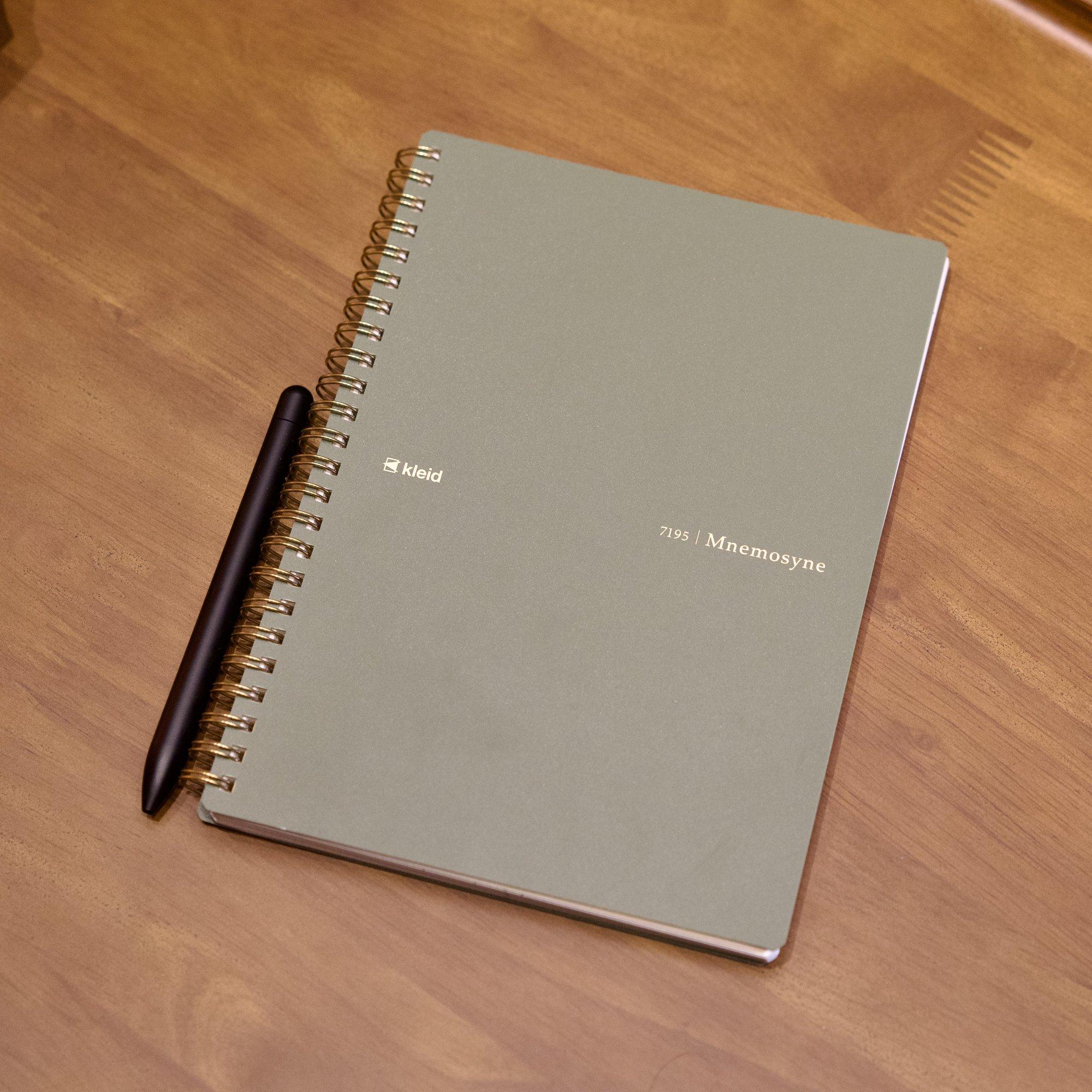
Okay it's not an app, but I love taking notes, sketching UI designs and scratching off to-do list items in Mnemosyne x Kleid notebooks with my Baronfig Squire. I also love Uchida Le Pens for sketching too. I've gone through a few in 2025.
-
Dia has been my primary browser for the majority of 2025. After living with Arc for the few years prior, I'm really accustomed to a browser with side tabs. I've tried to get into the ChatGPT Atlas browser and Perplexity's Comet browser but they never stuck for me, even with the promise of all their agentic functionality. I just don't really have a huge need to automate things just yet.
Actually, I take that back, I would but the few times I've tried current solutions they were too slow and inaccurate. Maybe later in 2026. About 99% of what I have AI do in a browser for me is summarize long articles, and I use both Dia's integrated chat for that, and recently, Anthropic's Claude browser extension for that.
I just hope that Dia keeps its craft and charm even after its parent company's acquisition by Atlassian.
-
Flighty for insanely good flight tracking. I don't fly that much and this app is still worth every penny. I get notified of flight delays before the airlines send notifications. I can more easily look up alternate routes, see where the inbound plane is, and more. It's just a delightfully well-crafted app.
-
Yuka lets you look up the health impact of various food and cosmetic items. My wife and I use it often to make better choices when shopping, such as avoiding harmful chemicals.
There are a few apps like it but it's simple and works well. It does not have data about microplastics (you should definitely take a look at Nat Friedman's PlasticList) yet unfortunately, but other apps like Olive and Oasis Health do.
These days we're much more mindful about what we bring into the house and have replaced pans with non-toxic ceramic ones, plastic cutting boards with oiled wood ones, avoiding certain dish detergents, et cetera.
-
Mercury is hands down the best personal banking app and bank out there. There's an annual fee but you get a lovely, well-designed modern app with things like automatic transfer rules to move money around (e.g., don't keep cash in checking, always move to HYSA) and support for sending wires really easily.
-
NetNewsWire combined with Feedbin is my RSS reader setup of choice. NNW has been around since I had a G4 Mac Mini in my college dorm in 2004. Great, simple piece of software. Though I do wish it had slightly more robust search functionality.
-
Things has been my to-do list app for many years. Simple, well-built apps for desktop and phone. I have a few minor design gripes with it (what designer wouldn't have strong thoughts about their to-do list app) but it gets the job done. There's an unofficial Things MCP server I've been meaning to integrate into my workflow too.
-
Raindrop is where I send articles I want to read later, curate design inspiration, save interesting links, and everything in between. It also saves a permanent copy of each link you bookmark so it's still accessible even if that page ceases to exist on the web. I try to go through it weekly to organize and review what I've saved.
-
Obsidian (with the Cupertino theme) is my catch-all for daily notes and more. I pay for Obsidian Sync service too. While I have various folders for different types of documents from outlines and drafts of blog posts to documents for ideas, I primarily use it for work. I create a new file each week where I write notes for the week. At the bottom of each week's document I keep a running to-do list. At the end of each day I'll reprioritize that list or write down an action plan if I'm in the middle of a large task so I'm prepared the next morning.
While I really love Obsidian, it's not perfect. Searching for files is really, really rough in my experience. I need to keep things in organized folders as I know I'll need to find them later and can't rely on search. Also, despite a robust developer community, there's not yet an amazing LLM solution. Fortunately everything in Obsidian is flat files, so I often use Claude Code with my Obsidian vault for things like synthesizing summaries and themes across a lot of files.
And finally, the other thing I don't love about Obsidian is the mobile app navigation. It's likely a downside of it being a highly-extensible and cross-platform app, instead of a more opinionated native iOS app.
Despite using all these apps for notetaking, saving, and curating, I don't really like the term second brain for this PKM stack. This quote below from I Deleted My Second Brain resonates with me to a degree, and I sometimes find myself saving things I never revisit.
"The “second brain” metaphor misfits how human memory works: associative, embodied, and purposefully forgetful.
When I first started using PKM tools, I believed I was solving a problem of forgetting. Later, I believed I was solving a problem of integration. Eventually, I realized I had created a new problem: deferral. The more my system grew, the more I deferred the work of thought to some future self who would sort, tag, distill, and extract the gold.
That self never arrived.""
The Year of Claude Code
2025 was the year of coding agents for me (and everyone else too). It's a remarkable, remarkable tool. At the start of the year I mostly used Cursor for smaller tactical changes, but I quickly became heavily dependent on Claude Code. It just kept getting better throughout the year.
"Claude Code (CC) emerged as the first convincing demonstration of what an LLM Agent looks like - something that in a loopy way strings together tool use and reasoning for extended problem solving. In addition, CC is notable to me in that it runs on your computer and with your private environment, data and context."
—Karpathy
There's many articles online on the proper way to configure and use Claude Code, how to put skills, agents, and CLAUDE.md to work for you, but this thread from the Claude Code creator in particular is worth a scroll:

Tools like Claude Code still need constant babysitting and can sometimes get stuck in a loop, trying the same solutions that didn't work. I find it critical to try out other models regularly, even for the same task. For example, I get the feeling that Sonnet/Opus aren't amazing at more advanced or recent SwiftUI tasks. In a recent example it gave me the old GeometryReader hack for getting scroll offset from a ScrollView instead of the single .scrollPosition() modifier I wanted.
These days I'm usually bouncing between Claude Code (usually via their official extension inside Cursor, which has nice expandable inline diffs) and Gemini 3 Pro via Cursor Agents. I don't have a set workflow. Sometimes I'll have Opus make a plan, then have GPT poke holes through it before Claude Code implements. I've also dabbled with tools like Conductor.
Aside from the obvious desire for faster and smarter models that just nail each task, there's one thing I wish these tools were better at: undo.
I know version control is technically my job. Git exists. But when I'm iterating quickly on a specific piece of functionality, I want to easily roll back to the last known good version without thinking about it. That's often from a previous agent response. I can leave a trail of commits behind me, but that doesn't look great on a PR. I can spend more time amending commits or dealing with git rebase, but that's friction I'd rather avoid.
This feels like something these tools themselves should help with. Cursor, for example, doesn't have diffs for each agent response. If you want to undo the last change, you have to ask the LLM to do it, wait, and hope nothing else unexpected is changed in the process. Compare that to just discarding changes if you'd made a git commit.
Design + AI
Much of what I do is design something from scratch in Figma, get it to around 90% or to a point where I have a few options I can't decide between without trying them out, and then begin building it. Figma is very much still a starting point. Lots of iteration—in aesthetics, interactions, and logic—happens while I'm building and feeling it out with real builds.11 For me that even meant going deep on working with metal shaders this past year: an area that seemed too complex to approach previously.12 However, I will sometimes use Figma MCP to help speed up parts of the development workflow.
The act of building and testing out as you build is what design is all about to me. It rapidly surfaces new ideas for iterations and directions. There should have never been a design to engineering "handoff" phase. It's the same thing. Every designer should be a design engineer too. Being able to more rapidly build designs and interactions also means you no longer have to scratch your head trying to decide if you should come up with a long dissertation about why a certain piece of feedback from a peer or executive isn't worth pursuing. Most of the time, you can just try it out and see how it feels that day. Don't close off paths too soon.
The biggest shift in design has not been on the visual design front for me. I don't necessarily need production assets with models like Nano Banano Pro, nor are there any UI design tools good enough yet to truly enhance my visual and UI design workflow… yet. I've tried to use them for coming up with design inspiration for things like iconography and brand design tasks at times, but haven't found anything that truly enhances my workflow yet.
Designers need to push on what AI isn't good at yet. To me, that means constantly seeking inspiration, curating, and communicating well. Always be curious.
You need to constantly be seeking information and inspiration. It can come from anywhere. Archive what feels good, interesting, or provocative to you. Hone your taste. The best designers I know are always curating. Some on Are.na and X. Some just in their own Figma moodboards. Some with link saving tools like Raindrop. Build that habit.
Restraint in AI
With Claude Code, Cursor Agents, and dozens of other AI dev tools anyone can build for themselves now. We're entering the era of rapidly created, personalized and bespoke software. It's going to seem even more insane this year.
Just because you can, doesn't mean you should.
The hard part now isn't building. It's restraint in this world where we have more capabilities than ever.
I've noticed this industry is a bit too trigger-happy to jump into Claude Code and start generating, then immediately commit what was one-shotted. Maybe we should all be doing our own product plan mode outside of Claude Code's plan mode.
Taking a step back to ask what we're actually building and why before we start. It's too easy to skip the product thinking and strategy. That's the necessary but slow and hard work of deciding what should exist, why, and who it's for in the first place.
What I'm referring to is just the normal product development process we've been doing for decades. Nothing new here. Just a reminder to not skip it when AI makes the building process closer and closer to a single button press.
As I design things I'm continually in a loop asking myself things like:
- Do I even need that (button/view/interaction)?
- Is that implied constraint absolutely required? Is it validated?
- And some of the Rick Rubin questions like "What's the simplest way to express this idea?" or "What's the core feeling or essence we're trying to convey?"
- I also constantly reference the brainstorming questions in this article.
Similarly, even if AI does make something for you and does it well, quality can drop fast if you're not careful to polish and clean up everything afterwards. For code quality and product design quality. Always polish it yourself. That's where craft lives.
Thoughts on personality in AI
Everyone's building some sort of agentic assistant right now. Connect your calendar. Integrate your email. Take actions. It all feels the same. A lot of assembled parts. Too many teams skip the hard parts: personality that builds trust, memory that truly enables continuity, and extensibility that meets you where you are. They also don't think enough about the why. Okay, so you can access my calendar… now when and why am I supposed to use this?
That's why too many of these tools today feel like packaged slop.
Personality and memory are what make these tools feel familiar and natural, not merely transactional. When GPT-4o was retired after GPT-5 launched, people were genuinely upset. They had gotten attached to how 4o wrote, how it felt. That's not nothing. As AI becomes more ubiquitous, more ambient—even worn—this will only matter more. Even in quick interactions, the wrong tone and style is immediately clocked.
Personality, memory, and extensibility form the defining triad of future agentic systems that you'll want to use:
- Personality: Comfortable, safe, and genuinely helpful across long-running exchanges and fleeting moments alike. It builds trust, maintains patience when things break, keeps people engaged over time, and even makes things fun when warranted.
- Memory: For intimately understanding your preferences, retrieving past decisions, and helping proactively (or at least trying to) without overstepping or making assumptions. Memory is tricky to get right. When unexpected and done poorly it can fail hard and quickly erode trust. It's not just RAG or long context. It's selective context, memory, and reasoning working together.
- Extensibility: What use would this all be if these systems couldn't do things for you and integrate into your workflows and tools?
It's time to stop thinking about building these systems as a series of LEGO bricks to slap together.
2026
2025 was a lot of change compressed into twelve months—new job, new house, new daily habits. Most of it came down to getting rid of stuff, physically and mentally, that were getting in the way. Now I'm at Sesame working on problems I actually want to solve with people who care about the same things I do. This has been a lengthy article… a lot longer than I had originally planned. If you made it this far, thank you for reading.
While I've been religiously saving interesting links and articles for inspiration in Raindrop, one thing I've started doing in the last year is maintaining a single markdown file where I paste interesting design-related quotes and related things. I wanted to close this article with a few of those.
I always like to refer to old computer and operating system reference material and designs for inspiration. The creators of these systems started from what felt like a blank canvas, drawing on things like the desktop metaphor, to build what we have today. I try to get myself into the mindset they might have been in when thinking about the next generation of computing we'll have with AI. Palm webOS is a great one too… I got a Palm Pixi Plus recently:


"People aren't trying to use computers—they're trying to get their jobs done."
—Apple, Human Interface Guidelines: The Apple Desktop Interface (1987)
On seeing things fresh and getting unstuck:
"[…] looking closely at the micro level can unblock you for understanding the macro level. […] Pirsig's Brick is a tool for seeing things freshly “without primary regard for what has been said before” which creates that perfect tension of challenge and ability enabling flow."
—Jordan Moore, How to Dismantle a Creative Wall
"But there's a paradox at the heart of design that's rarely discussed: the discipline that most profoundly determines how lasting and inspiring a work of design can be is a designer's ability to look away — not just from their own work, but from other solutions, other possibilities, other designers' takes on similar problems. […]
The most innovative solutions often come from designers who are aware of conventions but not beholden to them. […]
This discipline of looking away preserves the singularity that makes great design resonant. When we constantly reference existing solutions, our work inevitably gravitates toward the mean. […]
This is perhaps the most difficult discipline in design — harder than mastering software, harder than learning color theory, harder than understanding grids and proportions. It requires confidence to trust your own vision when countless examples of "how it's done" are just a search away. It demands the courage to pursue a direction that hasn't been validated by others.
—Christopher Butler, Good Design Comes from Looking, Great Design Comes from Looking Away
On design conviction:
"There's an important rule of prototyping: find the fun first and build from there. In all of your brainstorming, you need to determine what is actually fun to play. Sometimes a really complex or interesting system is compelling to plan out, codify, and parse as an algorithm… but then turns out to be lackluster to engage with. Keep moving. Find this fun as fast as possible, and don't accept anything less. Your players won't either."
—Andrew Zigler, MUD Cookbook: design meets implementation
"Conviction often stands in opposition to market trends. To have conviction before validation may make you seem weird or delusional, but it defines great artists—the ability to appreciate what others overlook or even fight against."
—Willem Van Lancker, Design Literacy
"Hayden, you can't change the world. It's not possible. All you can do is try to make your own world and then invite other people to be a part of it."
—George Lucas to Hayden Christensen
On soul:
In its purest form, design is poiesis. It is drawing ideas from the ether. It's a Muse.
"Beautifully designed products without soul, are just that: representational garden art. In all of our history, we've never had more money to design beautiful, functional and usable products. The bar is higher than ever, yet, they've never been more boring and devoid of soul."
—Steyn Viljoen, Beautiful, boring, and without soul
On software today, especially with this era of personalized software:
"software isn't just functional anymore. it's quietly turned into a lifestyle brand, a digital prosthetic we use to signal who we are, or who we wish we were.[…] people don't just use these apps. they use them to imagine themselves differently. more organized. more intentional. more in control. apps like superhuman or linear aren't just tools, they're lifestyle upgrades. software that feels like a reward. a signal that you care about your time, your taste."
—you are what you launch: how software became a lifestyle brand
"We stopped doing the real thing that would be the most empathetic, useful, and that would actually serve business outcomes best: building stuff that worked well and that people would love."
—Jenny Wen, Don't trust the (design) process
As for books, I did not read much at all in 2025 and really need to change that in 2026, similar to my 2017 goal of reading 24 books. I'm currently reading The Soul of A New Machine and The History of the Future: Oculus, Facebook, and the Revolution That Swept Virtual Reality. I'll probably find more from this list of books mentioned on Hacker News.
1 After 20 years, I finally got my G4 Mac Mini back. The person I sold it to reached out after noticing my gear pages where I've been collecting vintage gadgets and asked if I wanted my old Mac Mini back. I need to add it to my gear section. I have an old Intel Mac Mini too.
2 I've been running this site for half my life. These days I mainly just try to keep my gear pages updated frequently, and then only focus on an article when I have some topic I want to go deep on, a perspective I think is unique and worth unpacking, or generally just something I want to nerd out on. That tends to mean about one longer article per year, which is fine with me. Work consumes a lot of my time and I'm passionate about designing and building great products.
3 Also, I've worked with too many people who use their past experiences as the primary input for a decision. That's not only the wrong approach all too often, but it also makes everyone around them resent their unwillingness to consider new ideas and perspectives (or even just entirely different culture, values, quality, people).
Not to mention.. do you know how annoying it is to keep hearing, "When I was at [company], we did X."? I always, always try to catch myself when I'm about to say that about my time at Twitter or another past company.
4 Even with fresh daily contacts, they're still nowhere near as comfortable as glasses on my eyes. Glasses are just easier and I've started collecting eyewear I really like, such as Mr. Leight and Lindberg.
5 Not being emotional with investments like that and being quick to diversify is something I learned after being at Twitter for 9 years where the stock was performing pretty poorly most of the time. Whenever I'd vest new RSUs and have an open trading window I'd immediately sell them. The logic there was "if you had $X in cash right now, would you go out and buy Twitter stock?" The answer for me was usually no.
6 Mastodon didn't quite pan out. I got really excited about the prospect of owning and hosting my own social media back when the Twitter exodus began in 2023… but it was never quite as active over there (same with Threads and Bluesky), and I still prefer Twitter/X.
7 I stopped the process with one company after meeting the CEO I would have worked with who lacked that energy. Instead, it felt like they sucked all the energy from the conversation.
8 5-10 years ago it felt like there was a wave of designers that figured success was going on the management track early (after sometimes just 2 years as an IC) when on a large team and we had bloated teams with too many managers that slowly lost touch of craft over time. Now they're having a hard time getting back into IC.
Similarly, designers that don't do well with 0-1 design from scratch, for example without relying on existing design systems, will have a harder time operating on these smaller, craft-focused teams. AI tools today can't help that much on the visual design side, and people lacking those foundational skills will need to find ways to adapt.
9 My 2.5 years endlessly designing, building, then redesigning and rebuilding every part of my app Stocketa prepared me well for sweating the front-end details. Lately I've also been touching some metal shaders as well.
10 We do, however, have quite a few hardware product designers and industrial designers.
11 The new problem is now when people ask for a specific Figma mock of something in the app; the latest version is in the app and it's much more work to go back and update Figma mocks to be production accurate. Probably a product opportunity for Figma there.
12 Dan Hollick's Making Software chapter about shaders is a great read.